Image
Our researchers improve food security, protect wildlife, ensure a clean water supply, develop climate change solutions, and bolster the health and sustainability of natural and managed systems. Public and private investments, legislator support, institutional partnerships, and the dedication of our faculty and students make this work possible.
Below, we showcase recent examples of our most impactful research in the area of agriculture and the environment. You can download a printable pdf version and also subscribe to one of our ACES e-newsletters to stay abreast of new developments in ACES research.
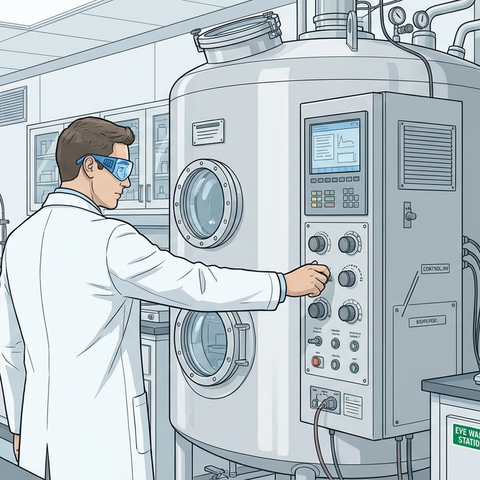
The Integrated Bioprocessing Research Lab (IBRL) and the Illinois Fermentation and Agriculture Biomanufacturing (iFAB) Tech Hub anchor Illinois’ leadership in a rapidly expanding bioeconomy. Since opening in 2018, IBRL has partnered with 140 companies to complete thousands of projects, helping de‑risk the path from lab discovery to commercial production. iFAB is now expanding pilot capacity into full demonstration and industrial‑scale biomanufacturing infrastructure, enabling innovators to commercialize new bioproducts more efficiently and at greater scale. Drawing on abundant Illinois corn and other feedstocks, these facilities open high‑value markets that boost farm profitability, while simultaneously training the skilled workforce required for a strong biomanufacturing sector. Their work fuels an industry projected to reach $200 billion by 2040. Together, IBRL and iFAB embody the 21st‑century land‑grant mission — linking research, education, and regional economic growth to deliver innovation that strengthens communities, farmers, and industry alike.
Funding: State of Illinois, U.S. Economic Development Administration, corporate investments.
ACES researcher:
Beth Conerty, Agricultural and Biological Engineering; Integrated Bioprocessing Research Lab; Illinois Fermentation and Agriculture Biomanufacturing Tech Hub
Related news stories:
Bioeconomy U: How Illinois is leading the bio-revolution
IBRL grows to meet increasing demand from bioprocessing industry
iFAB Tech Hub partners IBRL and BBP scale fermentation tech, jobs in Central Illinois
iFAB awarded $51 million EDA Tech Hubs grant to propel Central Illinois as a biomanufacturing leader
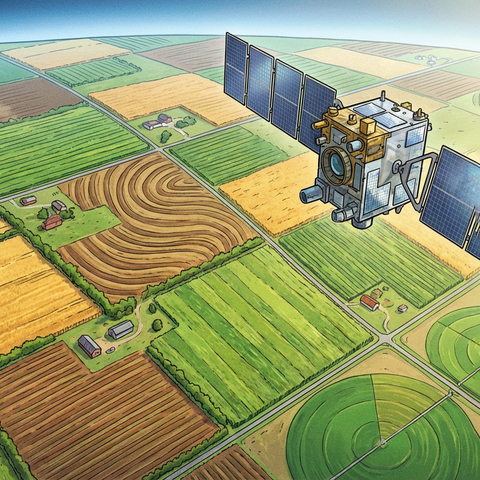
Researchers in the Agroecosystem Sustainability Center, a joint effort between ACES and the Institute for Sustainability, Energy, and Environment, are using satellite remote sensing, supercomputers, and AI to transform how we understand and advance agricultural resilience and sustainability across the Midwest. Their work leverages ground, airborne, and satellite data to map cover crop and tillage practices, monitor soil carbon, reveal the drivers of nutrient loss, detect crop nutrient stress in real time, and more. Using advanced modeling and AI techniques powered by the National Center for Supercomputing Applications, the team integrates decades of region-wide data to deliver forward-looking, policy-ready insights that reduce nutrient loss, promote healthier soils, support adoption of smarter practices, and thus achieve high productivity with both resilience and sustainability. Together, their research demonstrates how modern sensing and modeling technologies can shape a more sustainable, resilient, and data‑driven future for agriculture
Funding: U.S. Department of Agriculture, U.S. Department of Energy, the National Science Foundation, NASA, and the Foundation for Food and Agriculture Research.
ACES researchers:
Kaiyu Guan, Natural Resources and Environmental Sciences
Bin Peng, Crop Sciences
Related news stories:
Illinois researchers untangle drivers of nitrogen loss in the Upper Mississippi River Basin
Study forecasts tile drainage and crop rotation changes for nitrogen loss
Corn productivity in real time: Satellites, field cameras, and farmers team up
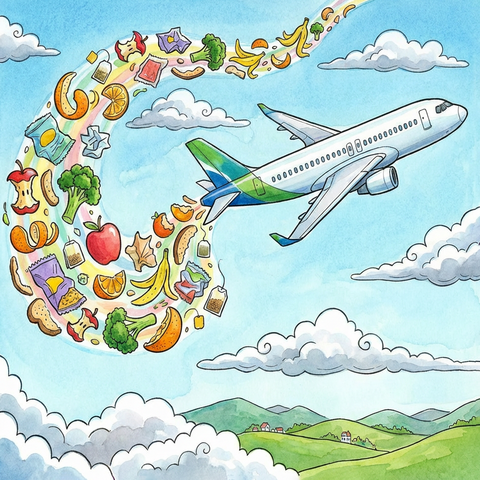
ACES researchers have developed a breakthrough process that converts food waste into sustainable aviation fuel (SAF), creating new market opportunities for agricultural byproducts while strengthening the circular bioeconomy. Their hydrothermal liquefaction system transforms discarded food into biocrude oil, which is then upgraded into industry‑ready jet fuel. By turning waste streams — including materials from food processing facilities and other agricultural residues — into high‑value energy products, this technology expands new uses for U.S. agricultural outputs and reduces pressure on landfills and emissions linked to decomposition. With agriculture poised to supply critical feedstocks for SAF, the innovation not only supports emerging clean‑energy markets but also offers long‑term economic benefits for farmers and rural communities.
Funding: U.S. Department of Energy and the National Science Foundation.
ACES researcher:
Yuanhui Zhang, Agricultural and Biological Engineering
Related news stories:
Illinois researchers convert food waste into jet fuel, boosting circular economy
Illinois studies explore converting wastewater to fertilizer with fungal treatment
Illinois research shows benefits of prairie grass for sustainable aviation fuel
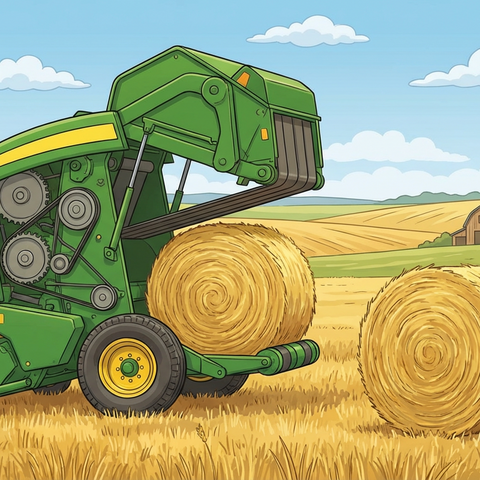
As demand for low‑carbon fuels accelerates and growers seek more profitable cropping systems, optimizing bioenergy production has become increasingly essential. ACES researchers are addressing this need by identifying harvest and nutrient management strategies that significantly improve the profitability of bioenergy crop growers. By comparing stepwise and integrated harvest methods across 125 commercial‑scale switchgrass sites, the team found that tailoring equipment choices to field size and yield can cut production costs, lower energy use, and reduce greenhouse gas emissions. Complementary long‑term nutrient studies in Miscanthus show how strategic nitrogen management sustains biomass productivity, strengthening feedstock reliability for emerging bioenergy markets. Together, these insights help expand market opportunities for U.S. agricultural products while boosting farmers’ bottom lines in a growing renewable‑fuel economy
ACES researcher:
D.K. Lee, Crop Sciences
Related news stories:
Illinois research uncovers harvest and nutrient strategies to boost bioenergy profits
CABBI team designs efficient bioenergy crops that need less water to grow
Carbon mitigation payments can make bioenergy crops more appealing for farmers
227 Mumford Hall, MC 710
1301 W Gregory Dr.
Urbana, IL 61801
Email: aces@illinois.edu