Illinois experts discuss proposed changes to FDA food ingredient approvals via GRAS
The U.S. Food and Drug Administration recently proposed a rule that would change how new ingredients enter the food supply for humans and animals. The agency states that, since 1958, manufacturers have been permitted to draw their own conclusions about the safety of these ingredients through a “Generally Recognized as Safe” (GRAS) framework. The proposed rule would require companies to notify the FDA of all GRAS determinations going forward.
While a complete lack of oversight on food ingredients would, indeed, be alarming, University of Illinois Urbana-Champaign experts note that GRAS does not mean an ingredient is exempt from safety standards. They say the existing GRAS rule provides for recognition of each new ingredient’s safety by qualified experts, with results made available to the FDA.
Below, Illinois experts explain how the GRAS process works and what a change would mean for consumers, product safety, and the advancement of newer manufacturing technologies, such as precision fermentation.
What is GRAS?
Kelly Swanson has served on multiple GRAS panels for human and animal foods over the last 15 years. He is director of the Division of Nutritional Sciences and professor in the Department of Animal Sciences, both part of the College of Agricultural, Consumer and Environmental Sciences at Illinois.
Swanson explains that new food ingredients entering the market through the GRAS pathway can include proteins, fibers, vitamins, spices, and more. These include novel formulations or ways of processing existing foods, resulting in ingredients like citric acid or pea protein isolate.
For an ingredient to be considered GRAS, Swanson says, all data necessary to establish safety must be publicly available, and its safe use must be generally recognized by qualified experts. An ingredient must also have reasonable certainty of no harm under the conditions of its intended use.
The process includes assembling the scientific evidence supporting the GRAS conclusion in a GRAS dossier. Most companies also convene a panel of scientific experts, including academics and consultants who specialize in toxicology, food science, or nutrition, to evaluate that evidence. The panel members then analyze all of the available toxicological, nutritional, and other safety-related data for each ingredient under consideration, at the specific quantity present in the food.
The GRAS determinations are then either submitted to the FDA immediately or held by the company for future inquiries by the FDA. The latter is known as self-declared GRAS or self-GRAS. The proposal would make it mandatory for companies to notify the FDA of all GRAS data.
Swanson says it is in a company’s best interest to convene robust, unbiased GRAS panels and retain evidence to show that the appropriate procedures were followed. “If harm is ever evident once an ingredient is in use, there would definitely be an FDA investigation and a lot of other things to deal with,” he said.
Impacts on industry
Changes in the process could significantly affect food companies, including those in the growing biomanufacturing sector. Many of these companies are leveraging precision fermentation, a process in which tailor-made microbes convert raw ingredients like corn sugars into food ingredients that are chemically identical to those found in chocolate, eggs, fruits, milk, and other traditional food products. Enzymes like rennet for traditional cheesemaking have been produced using precision fermentation for decades.
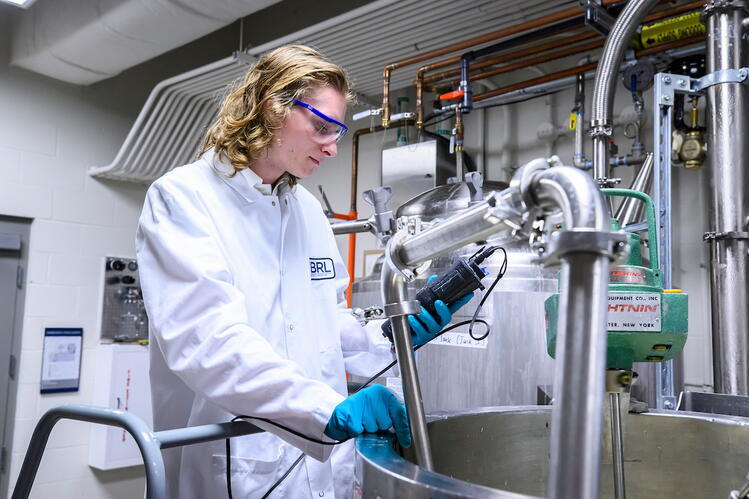
Marissa Nyland, assistant director of operations and safety in the Integrated Bioprocessing Research Laboratory at ACES, says precision fermentation is also used to make ingredients that are less recognizable to the consumer but still critical to food production, like food colors and texturizing ingredients such as gelatin or collagen. Although many products are identical to their traditional counterparts, the products are considered new ingredients because they’re often made using engineered microbes, even though the microbes themselves do not end up in the final food product. Therefore, they are subject to GRAS protocols.
“From what I understand from our clients’ perspectives, self-GRAS has been helpful in accelerating time to market for companies that are making something bio-identical to things that exist in nature already, like the proteins from meat or natural food dyes, since we already eat those things,” Nyland said.
Beth Conerty, associate director of business development for IBRL and regional innovation officer for the Illinois Fermentation and Agriculture Biomanufacturing Tech Hub, says mandatory FDA review for all new ingredients could help with transparency, but there are tradeoffs.
“Food ingredient startups have been moving fast and undergoing a lot of changes. Mandatory review of GRAS packages could slow down their entry to market,” Conerty said. “I believe that there have already been long wait times for companies to receive their ‘no-questions’ letter from the FDA, and if every food ingredient company now has to go through the process, I presume the backlog will intensify.”
Conerty adds that the proposed rule includes exemptions for ingredients and food processing technologies that existed before 1958. But older doesn’t necessarily mean better or safer.
Newer technologies like precision fermentation and biomanufacturing may sound foreign, but they tend to have a much smaller environmental footprint than traditional processes. And more companies are turning toward these processes because the end products are much more consistent, benefiting final-product formulation, performance, and consumer satisfaction.
Impacts to consumers
Swanson echoes Conerty’s concerns that the proposed rule change could slow product development and raise food costs for consumers.
“The FDA is understaffed, so the review process already takes a long time. If self-GRAS goes away, the time to receive a ‘no-questions’ letter will likely increase, as well as costs that are difficult for smaller startup companies to absorb. Many of these costs could be passed on to the consumer,” Swanson said. “For novel ingredients, the process can require years of research and millions of dollars to get sufficient data, prepare GRAS dossiers, and convene GRAS panels.”
Swanson, Nyland, and Conerty agree that greater transparency is a worthy goal, but they believe the self-GRAS process may be shouldering the blame for a separate issue: unhealthy foods.
“The GRAS process is meant to evaluate the safety of an ingredient and its approved use (e.g., no toxicological or mutagenic effects). It’s easy to confuse the safety of ingredients with the consumption of unhealthy foods and overeating, which can lead to obesity and other long-term health issues. Those are not safety issues, they are health issues,” Swanson said.
“While the ingredients used in food products can have an influence, other factors are more important in that regard,” he added. “Nutrition education, adjusting food prices (e.g., fresh fruits/vegetables are expensive but fast-food is cheap), and other environmental, cultural, and societal factors are the key factors here. Closing the self-GRAS option will not do anything to solve that problem.”
The proposed rule is open for public comment until Dec. 9, 2026.