Longtime Morrow Plots steward leaves lasting legacy
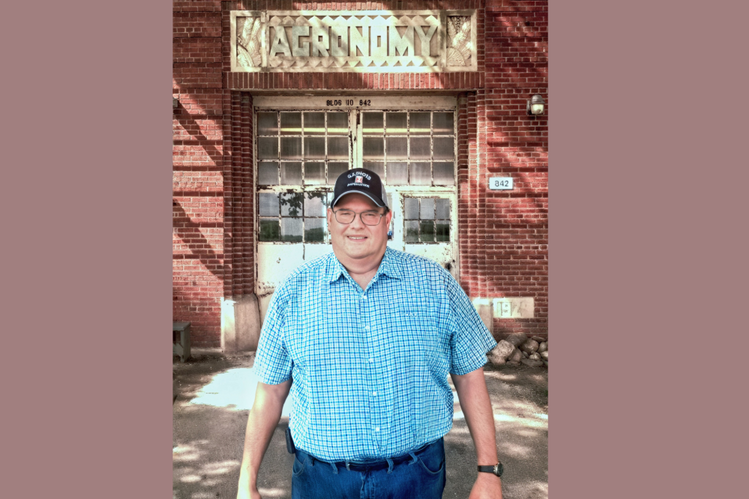
In the 150 years since the establishment of the Morrow Plots at the University of Illinois Urbana-Champaign, many forward-thinking people have had a hand in their upkeep and management. But in that long line of leaders — from founder Manly Miles to current director Andrew Margenot — it’s recently deceased Robert Dunker whose love and dedication towards the plots may surpass the rest.
Dunker, who passed away in April 2025 at the age of 74, worked for the U. of I. for over 40 years, serving as superintendent of the Crop Sciences Research and Education Center (CSREC) for more than half of that time. In that role, he managed the 1,600 acres of research fields south of campus as well as the Morrow Plots. It was the fulfillment of a lifelong dream for him, according to his wife, Mary Lou.
“He knew at a very early age that he wanted to come to the U. of I. to study and work in agronomy. It was a life goal for him, and he knew it was the place he wanted to be,” she said.
After earning his bachelor’s degree in 1972 from the Department of Crop Sciences, part of the College of Agricultural, Consumer and Environmental Sciences, he went to work for the department as an agronomist and technical manager in soil reclamation. During that time, he enrolled in the department’s master’s program in agronomy, earning that degree in 1986. Eight years later, Dunker secured his dream job as superintendent of CSREC and continued in that role until he retired in 2015.
Having developed a special interest in soils, Dunker deeply appreciated the significance of the Morrow Plots. After all, some of the most fundamental discoveries related to soil health and fertility were made in that very spot. Stewarding the plots and doing right by their history felt like an awesome responsibility.
“He was really proud about how it was so historic. At his essence, he was a soil scientist, so it was important to him,” said Clay Dunker, one of Bob and Mary Lou’s four children.
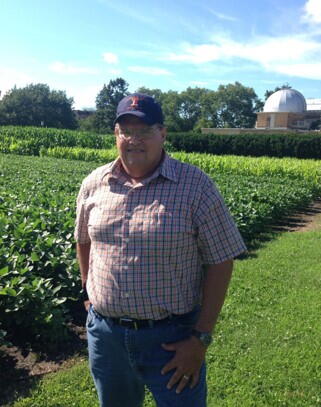
Early in his tenure as superintendent, Dunker had the innovative idea to preserve archival data from the Morrow Plots and the rest of the CSREC, paving the way for scientists and historians to access records that had been hand-written and stored in individual labs, boxes, sheds, and barns across campus. His efforts inspired the formation of the Morrow Plots Data Curation Working Group, which made 130+ years of data from the plots publicly available in 2023.
Dunker’s personal dedication to preserving the plots’ history kept them going when they might have otherwise languished.
“The plots have changed hands many times. My sense is that their management lapsed a little bit in the 1980s, and Bob took them up and rescued them,” said soil science professor Andrew Margenot, director of the Morrow Plots and Alma Mater Plots. “They became a National Historic Landmark in 1968, but at that point, I think the insights of the Morrow Plots had really slowed down. It was no longer cutting edge (because it did its job!). It was becoming a valuable long-term academic experiment. Bob helped preserve it, keeping the practices the same to maintain the integrity of the data.”
Dunker was known for spreading the gospel of soil science and the Morrow Plots, both in his travels around the world and closer to home.
“He would bring home slides of plots of land and soil and put them on the projector in the living room. He would be very excited to point out the differences in color and just thought it was all very cool. I don't think we played along very well as kids,” said daughter Courtney Dunker. “He just wanted people to see that side of it, how cool the science was.”
Daughter Carey Dunker says her father talked so frequently about the Morrow Plots that each of his four kids could pull out fun facts about them from an early age.
“I don't think many girls in junior high knew that the Morrow Plots are the oldest research plots in North America. We were ready with that at all times,” she said. “I remember him saying that after he died, he wanted to be put at the Morrow Plots.”
Now, in a way, he will be.
During this year’s sesquicentennial celebrations and amid renovations of the plots themselves, a memorial bench has been installed near the plots and dedicated to Dunker’s contributions. It was a way his family could ensure his memory lives on in the place he loved best.
“Other than his family, who I would say was his first priority, I don't think there's any question that the university and his work there were among the things that mattered most to him. We wanted the memorial bench to acknowledge how important it was to him, but also how proud we are of him and the contributions he made to the university, students, and to the research community,” said daughter Kathy Garrison.
The family worked with the ACES Office of Advancement to make it happen.
“As we celebrate 150 years of the Morrow Plots, it feels especially right to honor someone who did so much to carry them forward,” said ACES Associate Dean for Advancement Maggie Wave. “The Dunker family’s gift ensures that Bob’s care for this place, and his belief in why it matters, will be remembered by everyone who stops to sit there.”
ACES Dean Germán Bollero ascended from crop sciences faculty to department head to associate dean for research before Dunker retired. Through it all, he relied on Dunker’s wisdom and counsel.
“I learned a lot from him as a leader and as manager of the farm. And not only the CSREC — he had really a good grasp of what it meant to do research across the state of Illinois, across the nation, across the globe. More importantly, he was a good person with a huge heart who helped a countless number of students and faculty. He loved the U. of I. and made us look good.”
For Bollero, the bench will serve as a lasting reminder of Dunker’s legacy.
“Bob took care of the plots for many years, and now his presence will remain on that bench,” Bollero said. “Every time I walk by, I will see Bob sitting there, watching over the Morrow Plots.”
For more on Dunker’s life, read his obituary.