How farmers respond to climate-related risk
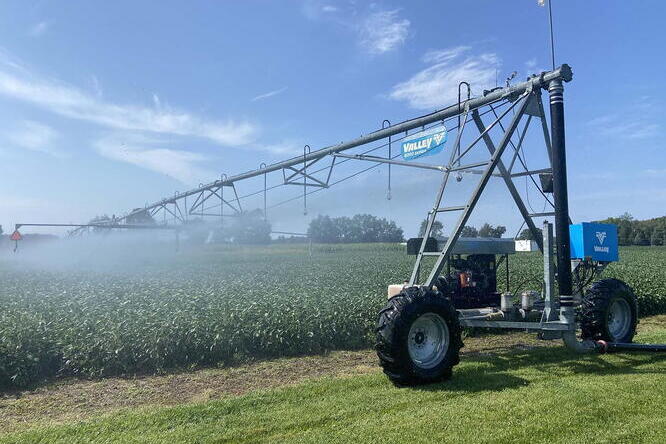
As climate change increases the frequency of drought, excessive rainfall, and other extreme weather events, farmers face growing uncertainty about crop production. Understanding how farmers perceive and respond to that uncertainty can help improve agricultural policy and climate adaptation strategies. A new study from the University of Illinois Urbana-Champaign and Michigan State University examines farmer risk preferences when dealing with climate impacts.
“Crop yields depend not only on weather conditions, but also on the producer’s management decisions. We wanted to better understand how farmers perceive uncertainty under changing climate conditions,” said lead author Natalie Loduca, clinical assistant professor in the Department of Agricultural and Consumer Economics, part of the College of Agricultural, Consumer and Environmental Sciences at U. of I.
The researchers surveyed crop producers in Michigan to gauge their level of risk aversion in general, and within specific agricultural contexts. Using a choice experiment commonly employed in economics, participants selected between paired scenarios with different levels of uncertainty and potential returns. The aggregate results from a series of choices were then analyzed to estimate each respondent’s risk preferences.
Loduca and Scott Swinton, professor emeritus of agricultural economics at MSU, collaborated with Michigan State University Extension to recruit crop farmers across the state. They included corn/soybean farmers who operated at least 300 acres and relied on farming as a major source of income.
Participants were first presented with monetary lotteries with varying degrees of risk and reward. Each scenario offered a choice between high risk/high reward and lower risk/lower reward. Next, they viewed scenarios about farming management decisions and crop yield impacts. Lottery choices were presented as investment decisions to mitigate revenue loss from weather events.
The scenarios offered choices between taking no action or investing in drainage, irrigation, drought‐tolerant seeds, or crop insurance. Each choice would impact risks and payoffs on expected revenue for a 40‐acre corn field. The scenarios were designed to reflect realistic management decisions and potential corn yield outcomes faced by Michigan producers.
The researchers found that farmers were risk averse in both the general and agriculture-specific lotteries. However, attitudes toward uncertainty varied much more widely in the agricultural scenarios than in the general financial lotteries.
“The findings have implications for policymakers. Given the wide range of risk preferences across farmers, different types of programs or policies could be targeted to each group,” Loduca said.
“More risk averse farmers may be more likely to invest in adaptive technologies that reduce exposure to climate-driven yield risk. Farmers with a higher tolerance for risk may respond differently, which raises important questions about how policies and programs should be designed."
Loduca and Swinton are currently working on a study that links risk preferences to farmers’ actual decisions about future investments and adoption strategies, with the long-term goal of better understanding what is driving these decisions.
The paper, “Farmer risk preferences: Does context matter?” is published in the Journal of the Agricultural and Applied Economics Association [DOI: 10.1002/jaa2.70038}. Authors include Natalie Loduca and Scott Swinton.
Research in the College of ACES is made possible in part by Hatch funding from USDA’s National Institute of Food and Agriculture. This study was also supported by Michigan AgBioResearch and the National Institute of Food and Agriculture, award number 1832042.