Temple Grandin’s mind is a gift to livestock and humanity
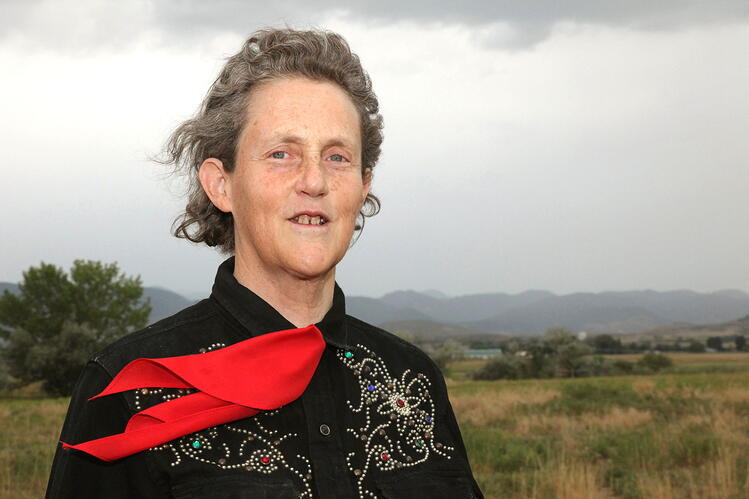
“We need all different kinds of minds.”
Temple Grandin’s neurodivergence is one of her biggest strengths. As a consultant and professor of animal sciences, she has led groundbreaking work in animal behavior and livestock handling, breaking barriers for both women and neurodivergent individuals in agriculture.
Her chute systems and restraining equipment are now used nationwide, setting the bar for humane livestock handling.
Grandin didn’t change the industry because she set out to be different; she did so because her mind naturally works that way. She can see the world through the eyes of livestock, a perspective that completely transformed animal handling and reshaped the industry.
Grandin has often explained that her ability to think in detailed pictures, a trait she associates with her autism, allows her to mentally step into an animal’s point of view. She notices shadows, contrasts, movement, and small visual distractions that others overlook. That visual logic would later become the foundation of her career, revolutionizing the design of livestock facilities.
And it all started at the College of Agricultural, Consumer and Environmental Sciences at the University of Illinois Urbana-Champaign.
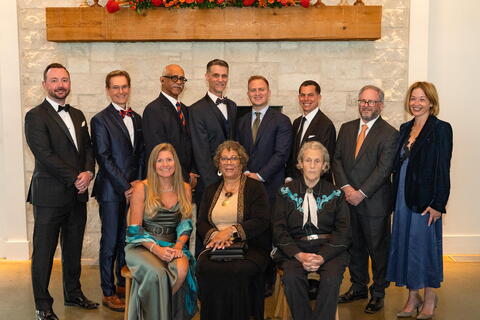
After earning her undergraduate degree from Franklin Pierce College (now Franklin Pierce University) and her master's degree from Arizona State University, she arrived at Illinois to pursue her doctorate in the Department of Animal Sciences.
“I knew about Stan Kurtis’s research, and that interested me, so I called him,” Grandin said.
Kurtis became a close mentor during her time at Illinois. He took the time to understand her unique way of thinking and supported her through challenges.
“I have some great abilities and places where I have great disabilities, so it wasn't easy. But I'm very grateful they let me in; good lab mates made it possible,” Grandin said.
Grandin calls herself a non-mathematician, so getting through math courses was challenging. But her empathetic connection to animals and her strong visualization skills helped her succeed in industrial process design.
“I discovered this wonderful world of industrial process equipment,” she said. “Then I discovered research on object visualizers. I thought I had died and gone to heaven.”
People who are object visualizers think in detailed, realistic images instead of words. They can mentally picture how things fit together or how a system works before it’s even built. It’s a great example of how different ways of thinking, like those found in neurodiverse people, can lead to new ideas and innovation.
As a teenager, Grandin designed a “squeeze machine,” inspired by cattle-restraint systems, to calm her anxiety. The deep-pressure device helped her regulate sensory overload and sparked a lifelong interest in how environment and physical design influence behavior. That early insight would later shape both her scientific research and her livestock-handling innovations.
With her creativity and guidance from mentors like Kurtis, Grandin pursued groundbreaking research that often overturned existing ideas.
Research at the time hypothesized that more complex environments would lead to more connections in an animal’s visual cortex. Grandin tested this theory by raising one group of pigs in plain plastic pens and another group in what she called a “Disneyland” for pigs with fresh straw and toys to play with.
The prevailing assumption was straightforward: more stimulation should build a more complex brain. Researchers expected to see physical evidence of that enrichment under the microscope.
But the results came back reversed. The pigs in the plain pens showed more complex nerve branching. Grandin recalled the moment: “I took a lot of samples, spent hours poring over a microscope, and in the end, the results were backwards. Backwards! The pigs in the plastic pens had more complex branching of their nerve endings. [My advisor] Bill summed it up in two words: ‘Oh s**t.’”
The finding forced researchers to reconsider how stress, stimulation, and development interact.
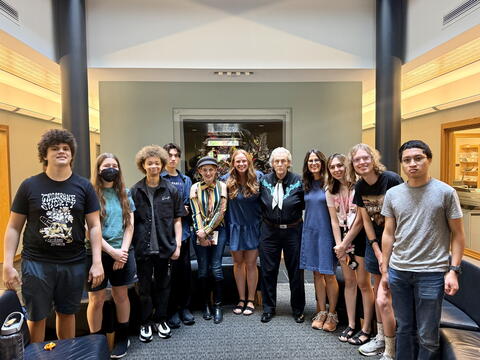
For Grandin, moments like this reinforced something she had long experienced firsthand: living beings do not always respond to the world as we predict. Paying close attention to how animals actually perceive the world became central to her work.
Her research at Illinois was the launchpad for her industry-changing career. Grandin’s hands-on approach helped people understand how cattle think and respond to their surroundings, leading to more humane and efficient handling systems.
Today, her curved chute systems and low-stress handling principles are used in meatpacking plants around the world. By eliminating sharp contrasts, sudden shadows, and visual clutter that can startle cattle, she has designed facilities that align with how animals naturally move and see. The result was not just calmer livestock, but safer conditions for handlers and more efficient operations.
Grandin is now passing her knowledge to the next generation as a professor at Colorado State University, where she teaches animal behavior, livestock handling, and facility design.
With profits from her book sales and speaking engagements, she has financially supported 24 students through the animal sciences doctoral program at Colorado State University.
Grandin is a huge supporter of student success and is quick to offer advice. Foremost, she has noticed in her teaching experience that students hesitate to ask questions or seek help, but her journey began with her cold-calling Stan Kurtis to learn more about his research, which ultimately launched her career.
Her advice: “Jump on the opportunity to help professors with research, and join clubs. Try different careers to find out if you like them. Print professors’ papers, then go visit the professor to talk about them,” she said. “Go to conferences. Don’t be afraid to walk up and get the card.”
Grandin’s impact on the livestock-handling industry is undeniable, but just as important is her influence on the future of education and on society's growing appreciation for unique minds like hers.
Temple Grandin’s success demonstrates the extraordinary value of different ways of thinking. The Illinois Neurodiversity Initiative (INI) is advancing that mission at the University of Illinois Urbana-Champaign by supporting neurodivergent students as they navigate college and prepare for their careers. Now in its fourth year, the program has served more than 70 students and currently supports about 50, with plans to grow even further in the coming year.
Make your gift to the INI program at go.aces.illinois.edu/give. Select “Other” as the designation and enter “Illinois Neurodiversity Initiative Support Fund 338865.
INI recruits students from admitted incoming freshmen through seniors who are interested in joining a supportive community designed to help them thrive academically and professionally — visit ini.illinois.edu to learn more and apply.