Illinois scientists reveal how tile drainage transforms agroecosystems through soil oxygen
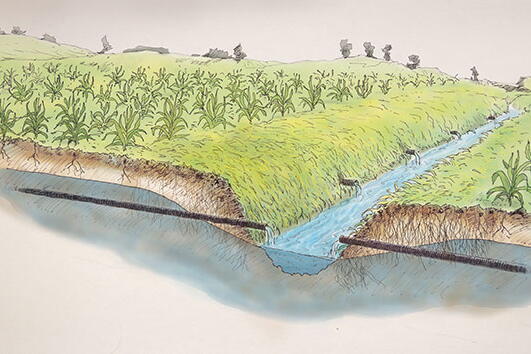
A new study from the Agroecosystem Sustainability Center (ASC) of the University of Illinois Urbana-Champaign provides one of the most comprehensive explanations to date of how tile drainage, a common agricultural practice, enhances the functioning of agricultural landscapes. Although tile drainage has been widely studied as an important form of agricultural infrastructure, the new study built a comprehensive framework to explain why tile drainage is so effective across a wide range of outcomes. The study pinpoints soil oxygen dynamics as the critical, hidden mediator that is pivotal for drainage impacts on crop growth, soil health, and crop resilience.
The study recently published in Hydrology and Earth System Sciences demonstrates that the benefits of tile drainage extend far beyond simply removing excess water from fields. Tile drainage fundamentally alters soil hydrology by reducing soil water content, which then enhances soil oxygenation. These hydrological impacts have complex effects on soil biogeochemistry and plant biology. For example, the improved aerobic condition alleviates crop oxygen stress during wet springs, which, in turn, promotes early crop root growth. The increase in oxygen availability also stimulates microbial activity, which accelerates the decomposition of organic matter and nutrient cycling.