From survey to service: Illinois students listen closely to deliver community-based solutions
How do you assess the health needs of an entire community, especially its most vulnerable members? It’s a huge logistical challenge for public health offices serving counties and states around the country, but an accurate view of community health is needed to guide the services they offer and to reach their intended audiences.
The Champaign-Urbana Public Health District has embarked on community needs assessments, but past efforts require updating to represent populations currently at-risk, including unhoused individuals, people with disabilities, elderly residents, and others. For the next assessment, slated for deployment in 2028 or 2029, CUPHD turned to students in a graduate survey research methods course from the College of Agricultural, Consumer and Environmental Sciences at the University of Illinois Urbana-Champaign to draft a more inclusive survey.
“The new model is shifting away from a top-down, institution-driven approach to instead focus on accessibility, inclusion, and meaningful participation,” said Keyana Diaz, a doctoral student in the Department of Health and Kinesiology in the College of Applied Health Sciences. “Our sampling strategy specifically addresses the gaps that were apparent in previous cycles. These under-sampled groups face different barriers when it comes to assessing health and health care. Their perspectives are important when it comes to thinking about what the community needs as a whole.”
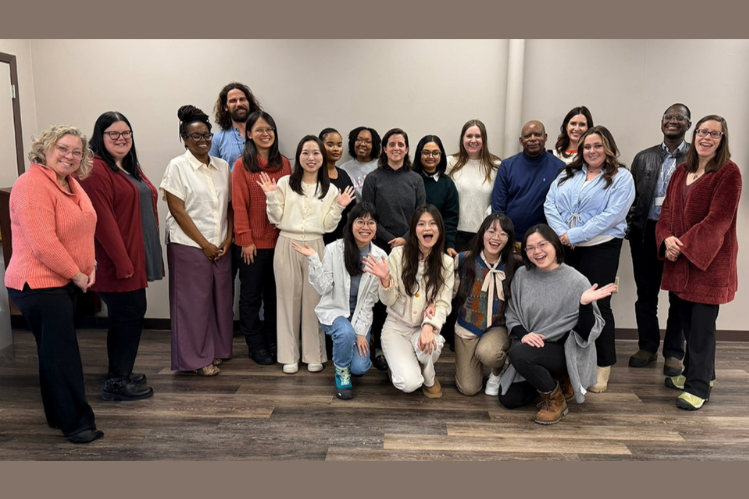
Diaz was part of a team in HDFS 580, a graduate survey methods course taught by Jacinda Dariotis, professor in the Department of Human Development and Family Studies and director of the Family Resiliency Center in ACES. Each fall, Dariotis teaches a graduate course in survey research methods or community participatory methods. This fall, she and her students met with community-based organizations that needed survey data about their members, volunteers, or other interestholders. The students worked closely with these organizations over the course of the semester, designing evidence-based projects and survey instruments to help their partners meet specific goals.
“This class is a perfect example of how ACES is fulfilling our land grant mission, connecting evidence-based research, high-quality, relevant educational experiences, and meaningful partnerships with community stakeholders,” said Anna Ball, ACES associate dean for academic programs.
In addition to CUPHD, students in fall 2025’s HDFS 580 course created surveys in partnership with three other organizations:
- Community Foundation of East Central Illinois (CFECI), a leading philanthropic organization connecting donors with local causes;
- DREAAM (Driven to Reach Excellence & Academic Achievement for Males), a community impact organization dedicated to advancing youth success through achievement, engagement, and behavioral health support;
- Cunningham Children’s Home, a child welfare agency that addresses the longer-term needs of children and young people who have experienced serious emotional and behavioral challenges.
Allison Winter, CFECI’s president and CEO, jumped at the chance to work with the students.
“Partnering with the survey methods course provided CFECI with a rigorous, evidence-based approach to strengthening how we collect and interpret data across our donor and nonprofit networks. The students’ methodological care and emphasis on inclusive design will significantly enhance our ability to assess sector needs, inform strategic decision-making, and guide future engagement efforts,” Winter said. “We also deeply valued building this connection with the university and recognize the tremendous impact of the faculty, staff, and students whose expertise, creativity, and commitment meaningfully contribute to both the academic environment and the broader community we serve.”
The survey created for DREAAM will be aimed at past and current youth participants and their parents or caregivers, helping to identify program effects on achievements and to re-focus the organization’s goals and identity.
“Over the past 10 years, we have done everything possible to reach at-risk youth in the community, sometimes spreading ourselves thin with new programs and offerings,” said Tamara Covert-Schnabel, director of outcomes and evaluation for DREAAM. “With this survey, we hope to highlight our areas of greatest impact so that we can focus our future efforts on what’s most important.”
Finally, Cunningham’s survey will gather key information needed to develop a training and mentorship program for its supervisors.
“I'm so excited to use this survey. I moved into my role over a year ago, and one of my biggest assignments was to do supervisor trainings and implement a mentorship program. I have been putting it off for a year because I didn't know the best way to match people together,” said Mandy Posey Stirewalt, associate director of training at Cunningham. “I am looking forward to using this tool to help me create a plan. The group was wonderful to work with, and it's been a really great experience.”
The community partners weren’t the only ones to benefit from the projects.
“Working on a project that would be operationalized by our partner forced us to expand our skills and frames of reference. Typically, we are developing tools that we are going to use ourselves, but this project took us out of our academic bubble,” said Teri Lahmon, a master’s student in the Department of Communication, part of the College of Liberal Arts and Sciences at Illinois.
“With every decision, we had to consider our partner’s resources — what software do they have access to? Research is not their primary focus, so how do we design something that is user-friendly, doesn’t require a heavy time commitment from busy people, and whose data is easily analyzed and doesn’t require a lot of high-level statistical math? It made us decenter ourselves and truly come from a place of service,” Lahmon added. “It wasn’t just about showing our professor what we learned, it was about building a real tool, for real people to make real decisions.”
At the end of fall semester, during “Dissemination Day,” the students present their surveys to the class and the community partners. But it’s up to the partners to decide what happens next.
“Ideally, they’ll administer these surveys to their interestholders, analyze the results, and make positive changes based on the findings,” Dariotis said. “Even though the course is over, I remain a resource for the community partners and aim to see their work continue to the next step.”
Sometimes, the organizations continue to refine the surveys before deployment. That’s the plan for CUPHD.
“The survey that was created by the student team is the first phase of a future community health assessment. Now that we have a sample survey, we will be working with multiple units at the university, including the Family Resiliency Center, as well as community partners to develop and validate a survey instrument. This survey will go through several iterations before implementation,” said JR Lill, IPLAN specialist at CUPHD. “But it has been great to see the development of the survey from the beginning, and to know how the team based it on best practices in survey research. We’re optimistic about serving the community in new ways based on the information we gather here.”
Dariotis is committed to ensuring her courses center community-led projects while meeting students’ training goals and needs and advancing the land-grant mission of the university. Her courses represent a win-win-win for community partners, students, and the university that she hopes will inspire similar participatory partnerships, trainings, and projects across Champaign-Urbana and beyond. Organizations interested in opportunities to engage or partner can reach out to Dariotis (dariotis@illinois.edu) and explore the Family Resiliency Center’s initiatives.