From Dirt to Data: Precision Agriculture at the Data-Intensive Farm Management Project
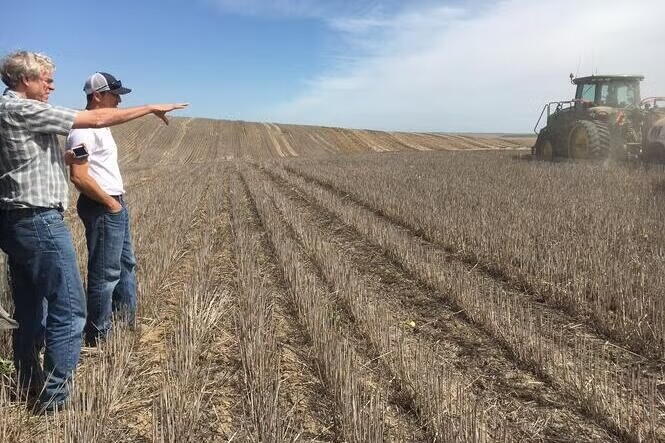
Precision agriculture first gained traction in the 1990s, when GPS technology made it possible for farm equipment to map and manage fields with a level of detail that was not possible before. Farmers could accurately apply fertilizer or seed at different rates across a field, responding to variations in field conditions.
The promise of precision agriculture was thought to be huge, with potential to make farming more efficient and data-driven. However, there was a major limitation: farmers didn’t yet have the information needed to effectively apply different inputs variably across a field.
For David Bullock, a professor in the Department of Agricultural and Consumer Economics, part of the College of Agricultural, Consumer and Environmental Sciences at the University of Illinois Urbana-Champaign, and his brother Donald Bullock, professor emeritus in the Department of Crop Sciences at Illinois, that gap sparked an idea: Instead of using precision technology only to manage fields, why not use it to generate the data needed to manage them better?
Read more from the Office of Data Science Research.